The controversy surrounding Malaysia Border Control and Protection Agency (AKPS) director-general Datuk Seri Mohd Shuhaily Mohd Zain at Kuala Lumpur International Airport (KLIA) has become much bigger than a viral video or an alleged confrontation.
It has become a test of Malaysia’s commitment to enforcement integrity, accountability and the rule of law.
Shuhaily is not an ordinary enforcement officer. He is a senior police officer with a reputation for being disciplined, uncompromising and “no-nonsense”.
Many members of the public have rallied behind him because they see him as an officer willing to confront corruption, misconduct and criminal activities within Malaysia’s border-security environment.
That public support is understandable. But it must not become a substitute for evidence. At the same time, criticism of Shuhaily must not become a substitute for evidence either.
Police have investigated the incident under Section 323 of the Penal Code and have reportedly recorded statements from 25 individuals while examining CCTV footage, medical evidence and other relevant material.
The investigation papers are expected to be submitted to the Attorney-General’s Chambers (AGC).
This is exactly what should happen in a professional criminal justice system: investigate first, assess the evidence objectively and only then determine whether prosecution is justified.
The crucial question is therefore not whether Shuhaily is a respected officer, nor whether a video has gone viral. The question is whether the evidence establishes the legal elements of an offence.
A viral video can provide an important piece of evidence, but it may not provide the complete story.
What happened before the recording began? What happened afterwards? Who initiated the confrontation? What was each person doing at the time? Was there a legitimate operational purpose?
Was any force used, and if so, was it necessary and proportionate? What do the CCTV recordings, witness accounts and medical findings show? These are questions for investigators and prosecutors; not social media.
There is, however, another question that deserves public attention: how did the CCTV recording of the incident become available and circulate so rapidly?
This should not be treated as an accusation against any particular person or organisation, but it is a legitimate governance and security question.
Reputable airports, airlines and other critical aviation facilities would ordinarily be expected to have policies governing CCTV access, retention, disclosure and the handling of sensitive security footage.
KLIA, as a major international airport and national security gateway, should be no exception.
The authorities should therefore establish, as part of the investigation, who had legitimate access to the relevant recording, how it was obtained, whether it was copied or released, and whether established CCTV and information-security procedures were followed.
The rapid public circulation of sensitive footage should itself be examined not because it proves wrongdoing, but because the integrity of security systems depends upon controlled access to security information.
There is also a larger criminological context that cannot be ignored. KLIA is one of Malaysia’s most important international gateways and a highly complex security environment involving numerous enforcement and security agencies.
Airports can be vulnerable to touting, trafficking, corruption, facilitation networks and the exploitation of official access. AKPS was established to strengthen precisely this area of national security. Its officers are expected to confront criminality, protect Malaysia’s borders and maintain high standards of integrity.
That makes the allegations surrounding this incident particularly important. If Shuhaily has indeed been confronting entrenched corrupt or criminal elements within the border-security ecosystem, his efforts should be supported.
Criminal networks often survive not simply because of criminals outside government, but because of weaknesses, opportunities and sometimes corrupt relationships within institutions. The questions should therefore go beyond one confrontation. Are there organised touting networks at entry points?
Are there insiders facilitating them? Who benefits financially? Are there weaknesses in airport security procedures? Are enforcement personnel being compromised? Are different agencies sharing intelligence effectively? These are the questions that ultimately matter for national security.
However, there is an equally important warning. Fighting corruption does not give any enforcement officer a licence to ignore the law. There is a dangerous tendency in public discourse to believe that an officer who is tough on criminals should be given greater latitude in exercising power.
That is precisely the wrong principle. A “no-nonsense” officer can be an enormous asset to law enforcement. But being firm is not the same as being arbitrary. Authority is not the same as personal power. And operational urgency does not automatically justify conduct that would otherwise be unlawful.
The higher the rank, the greater the responsibility to demonstrate restraint. This does not mean Shuhaily should be presumed guilty. Quite the opposite.
His presumption of innocence must be fully respected. His previous service record should also be recognised as relevant context.
But his reputation cannot become immunity from investigation or prosecution. Equally, an allegation cannot become a conviction simply because it attracts public attention.
This is where Malaysia must demonstrate institutional maturity. If the evidence shows that no offence occurred, Shuhaily should be cleared without qualification. If the evidence establishes misconduct that does not amount to a criminal offence, the appropriate administrative or disciplinary process should follow.
If the evidence establishes the elements of a criminal offence, then the law must take its course. There can be no special category of justice for senior enforcement officers.
The same principle must apply to those who made the complaint. They must not be intimidated, victimised or professionally disadvantaged merely because the person involved is a senior official. A credible justice system must be capable of protecting both the complainant and the accused.
The incident also raises the need for a serious review of inter-agency procedures at KLIA. Where AKPS, PDRM, Special Branch, immigration, customs and airport security personnel operate within the same environment, responsibilities and operational boundaries must be absolutely clear.
Confusion over jurisdiction or SOPs can itself create security vulnerabilities. This incident should therefore be used to strengthen coordination, communication, command protocols and accountability among all agencies operating at Malaysia’s borders.
There is also a legitimate question about whether the investigation should, from the outset, have been entrusted to an independent investigative mechanism.
When the principal parties involved are serving or former police personnel, even a professionally conducted police investigation can give rise to questions about institutional impartiality and public perception.
Independence is not an allegation of bias; it is a safeguard against the perception of bias. In a matter involving senior enforcement personnel, an independent body could provide greater public confidence that the evidence is assessed without institutional interest or influence.
The AGC now has an important responsibility. It must assess the investigation without fear, favour or public pressure.
It should not ask whether Shuhaily is popular, nor whether the public wants him prosecuted. It should ask whether the evidence and law justify prosecution.
My position as a criminologist is therefore straightforward: Shuhaily should not be charged merely because a video went viral. But neither should he be protected from a charge because he has an outstanding career.
If there is sufficient evidence to establish an offence under Section 323, he must answer to the law. If there is insufficient evidence, he should not be charged. That is the meaning of equality before the law.
Indeed, if Shuhaily is genuinely committed to removing the “ulats”, “kuman”, “kulat” and rogue elements from Malaysia’s border-security system, he should understand better than most that accountability is not the enemy of enforcement.
Accountability is what gives enforcement legitimacy. The real test of an honourable officer is not whether he is never investigated.
It is whether he is prepared to submit himself to the same standards of law, ethics and accountability that he expects from everyone else.
Let the evidence speak. Let the investigation be professional and, where necessary, independently scrutinised. Let the AGC decide independently. And, if necessary, let the courts decide. No hero worship.
No trial by social media. No selective justice. Just evidence, law and accountability. That is how Malaysia builds an enforcement system that citizens can trust.
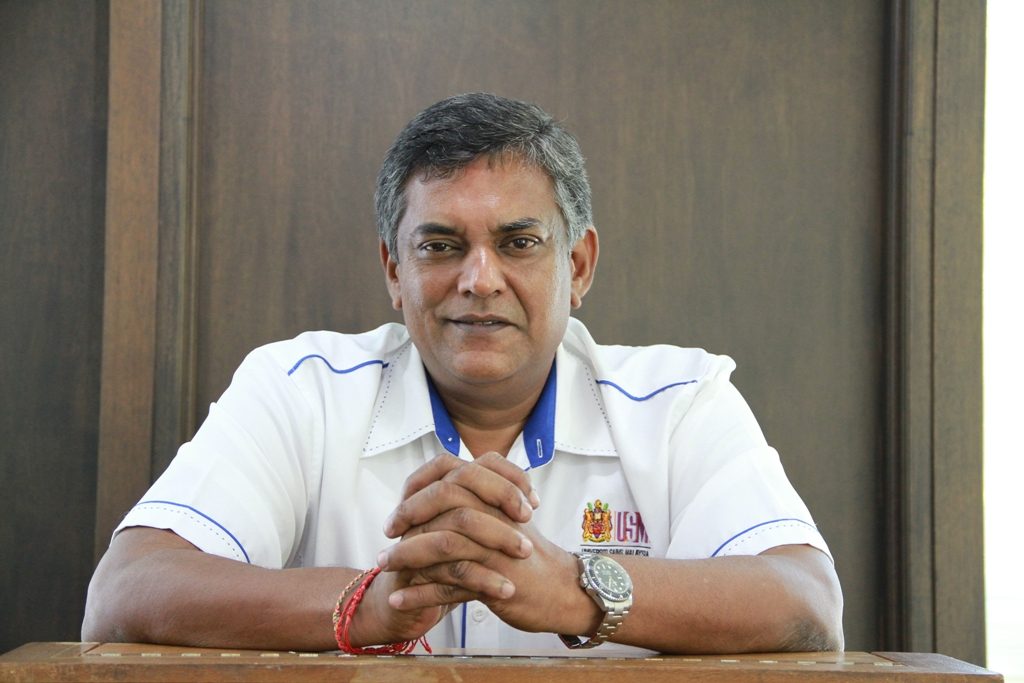
Dato’ Dr P. Sundramoorthy
Honorary Associate Professor
Centre for Policy Research,
Universiti Sains Malaysia
- MCPF SPT DLC supports Seberang Perai Tengah Mukim 21 pre-KABD Program by AADK Daerah SPT at Taman Guar Perahu and vicinity

- MCPF Barat Daya DLC Interim Chairman delivers ‘Pocket Talk’ in Program MADANI Kita (PMK) with Batu Maung @ Bayan Baru Community at SK Sungai Ara, Bayan Lepas

- MCPF Penang Interim Secretary & Barat Daya DLC Interim Chairman attends USAM Zoom Talk on “Scams in the AI Age”

- MCPF Barat Daya DLC Interim Chairman attends SJK (T) Sungai Ara’s 56th Annual Sports Day

- MCPF Penang congratulates DIG Dato’ Sri Abdul Aziz Abdul Majid appointment as the 30th Deputy IGP of Malaysia