
KUALA LUMPUR: The alleged hacking and manipulation of the Malaysian Immigration System (MyIMMs) should be treated as a national security issue rather than merely a corruption or cybercrime case.
Senior criminologist Datuk Dr P. Sundramoorthy said the Immigration Department serves as Malaysia’s first line of defence, making any compromise of the MyIMMs platform a direct threat to the country’s border security and sovereignty.
“MyIMMs is not merely an administrative database. It is critical national security infrastructure that regulates the entry, movement and exit of foreign nationals.
“If allegations that the system was deliberately manipulated are proven, this represents a compromise of Malaysia’s border security architecture rather than simply an IT breach,” he told the New Straits Times.
Sundramoorthy said the case also highlighted the dangerous convergence between organised crime and insider corruption, noting that criminal syndicates rarely succeed without assistance from individuals entrusted with legitimate authority and system access.
He was commenting on the arrest of 12 people, including four Immigration officers, who hacked the MyIMMs to fraudulently process and approve Temporary Employment Visit Passes (PLKS).
Initial investigations revealed that the syndicate had exploited unused PLKS quotas dating back to 2011 to issue work passes without paying the required levy.
“When trusted public officers collaborate with criminal organisations, they become trusted facilitators who enable illegal activities to appear legitimate.
“Such partnerships allow syndicates to bypass security controls that would otherwise be extremely difficult to penetrate.”
He warned that vulnerabilities within the immigration system could facilitate human trafficking, migrant smuggling, labour exploitation, money laundering, document fraud and other forms of transnational organised crime.
Sundramoorthy said the incident should not be viewed solely as a cybersecurity failure but as a governance issue involving insider corruption, weak oversight and technological vulnerabilities.
“Technology itself is rarely the weakest link. Even the most sophisticated digital systems become vulnerable when individuals entrusted with access abuse their authority.
“Insider threats often pose greater risks than external hackers because insiders already possess authorised access and understand institutional procedures.”
Sundramoorthy urged the authorities to conduct a comprehensive forensic audit of the MyIMMs system, review all privileged user accounts, verify work passes issued during the suspected period of compromise, strengthen AI-driven monitoring and establish a multi-agency task force involving the Immigration Department, police, the Malaysian Anti-Corruption Commission, the National Cyber Security Agency, the Malaysian Communications and Multimedia Commission and independent cybersecurity experts.
He said long-term reforms should include stricter access controls, dual authorisation for sensitive transactions, regular integrity audits, staff rotation and continuous background screening for officers handling critical national databases.
“If the allegations are ultimately proven in court and public officers knowingly collaborated with organised criminal syndicates to compromise a critical national security system, their actions represent a profound betrayal of public trust and the nation’s sovereignty.
“Parliament should also review whether existing laws are adequate to deal with such grave offences,” he added.
This article first appeared on NST.
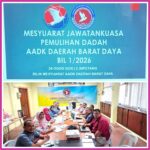
- MCPF Barat Daya DLC Interim Chairman attends AADK Daerah Barat Daya Drug Rehabilitation Committee Meeting at AADK DBD Office
- MCPF Penang Chairman accompanies Tan Sri Lee Lam Thye and MCPF EXCO to attend Courtesy Visit to TYT Tun at Seri Mutiara

- MCPF SPT DLC Interim Vice-Chairman II supports PDRM IPD SPT Meeting the Clients with the Community Program at Juru Auto-City Night Market

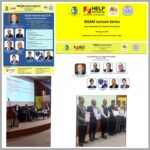
- MCPF Penang Interim Secretary attends BGAM Lecture Series (via Virtual Webinar) on Scam Awareness – Action and Prevention held at HELP University
- MCPF SPS DLC attends ‘Whitening Blackspot’ Program Discussion with PDRM, JPNIN & MPKK at JPJKK Division Office IPD SPS