

KLIA is an extraordinarily complex environment involving immigration, aviation security, customs, airport operators, airlines, ground handlers, auxiliary police and other personnel. The larger and more complex the system becomes, the greater the possibility of gaps between agencies, responsibilities and lines of accountability.
Therefore, when prohibited items pass through an international airport, the question should not simply be, “Why did the scanner fail?” It should also be, “At which point did the security chain fail?”
This distinction is important. Technology is only one component of security. A sophisticated scanner operated inadequately, interpreted incorrectly or placed within a weak overall security architecture does not necessarily produce effective security.
Recent government comments that existing scanners are capable of detecting contraband, while screening priorities have traditionally focused more heavily on weapons and explosives, reinforce the need to examine the entire security model rather than immediately assuming that equipment is the principal problem.
The second issue is insider vulnerability. Airports are unusual criminogenic environments because thousands of employees legitimately possess varying degrees of access to restricted areas, baggage systems, aircraft and operational information.
This creates what criminologists would describe as an insider-threat problem. An employee does not necessarily have to be corrupt from the beginning. Recruitment by criminal networks can occur through financial incentives, coercion, personal relationships or gradual involvement.
Consequently, security vetting cannot be regarded as a one-off exercise conducted when a person is recruited. For particularly sensitive positions, there must be continuing risk assessment, appropriate monitoring and mechanisms for identifying unexplained behavioural or financial indicators.
Third, authorities should consider whether individual incidents represent isolated offending or manifestations of established criminal networks.
If the same route, airport facility, employee category or method repeatedly appears in different cases, investigators should look for patterns rather than treating every incident as an independent event.
This is where intelligence-led policing becomes critical.
Enforcement agencies should be asking not merely who carried the prohibited item, but who recruited that person, who financed the activity, who facilitated access, who expected the shipment and whether the same network has used other couriers or routes.
Fourth, there is an important issue of organisational accountability. When security fails, responsibility can easily become fragmented.
One agency may blame equipment, another manpower, another procedures and another individual misconduct. Such fragmentation can create what criminologists call an accountability gap.
A serious post-incident review should therefore reconstruct the entire security chain and identify precisely where preventive, detective and supervisory controls failed.
Finally, KLIA should be viewed not merely as an airport but as Malaysia’s primary international border gateway. Repeated security breaches have implications extending beyond drug trafficking or contraband.
They potentially affect public confidence, Malaysia’s international reputation and the credibility of the country’s border-management system.
The lesson, therefore, is not simply that KLIA needs better machines. It needs a layered security architecture combining technology, competent personnel, intelligence, inter-agency information sharing, continuous integrity management and independent accountability.
The most important question is consequently not only “Who failed?” but “What allowed the failure to occur, remain undetected and potentially be exploited?”
That is the criminological question that deserves much greater attention.
Dato’ Dr P. Sundramoorthy
Honorary Associate Professor
Centre for Policy Research,
Universiti Sains Malaysia
- MCPF Barat Daya DLC Interim Chairman attends AADK Daerah Barat Daya Drug Rehabilitation Committee Meeting at AADK DBD Office

- MCPF Penang Chairman accompanies Tan Sri Lee Lam Thye and MCPF EXCO to attend Courtesy Visit to TYT Tun at Seri Mutiara

- MCPF SPT DLC Interim Vice-Chairman II supports PDRM IPD SPT Meeting the Clients with the Community Program at Juru Auto-City Night Market

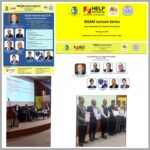
- MCPF Penang Interim Secretary attends BGAM Lecture Series (via Virtual Webinar) on Scam Awareness – Action and Prevention held at HELP University
- MCPF SPS DLC attends ‘Whitening Blackspot’ Program Discussion with PDRM, JPNIN & MPKK at JPJKK Division Office IPD SPS